5 mistakes to avoid before trading meme coins
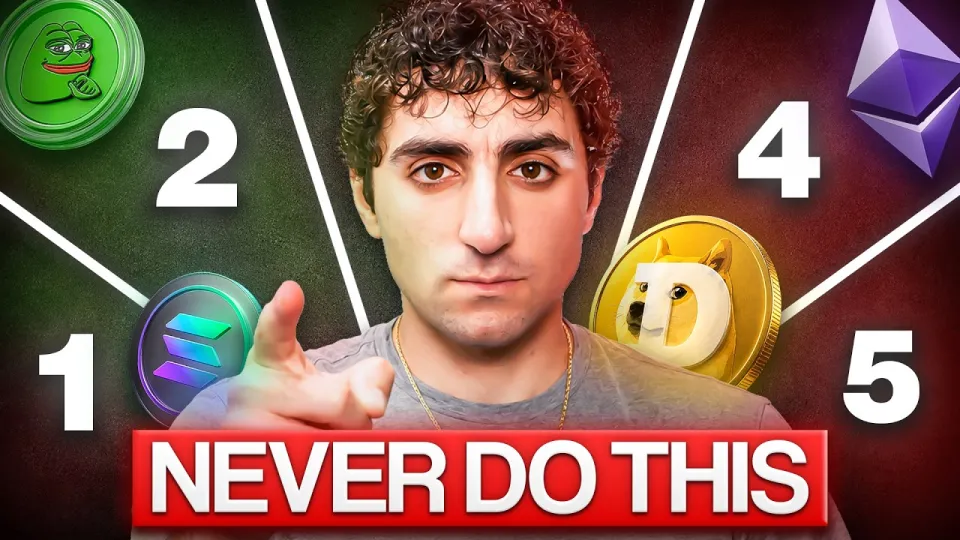
Video: 5 Things I Wish I Knew Before Trading Memecoins (Learn From My Mistakes)
Need articles like this for your video? They help promote it on YouTube and Google — order them in the Telegram bot @sat_sit_bot. Articles with your video embedded are written and posted by the bot itself — on popular topical sites (no ads). Your first 50 articles are free.
· based on the channel rasmr
Key takeaways
- Meme coin prices are driven by attention and liquidity, not by cash flow or earnings, so standard fundamental analysis does not apply.
- A single wallet holding a large share of supply can dump on you; check holder concentration and token unlocks before buying.
- Thin liquidity means your own sell order moves the price — slippage can eat a double-digit percentage of a position.
- Trading out of boredom, especially in a quiet market, is one of the most commonly reported ways traders lose a whole portfolio.
- Every meme coin trade needs a pre-set invalidation level and a plan for taking profit before the entry is placed.
Meme coin trading is a game of attention, liquidity and risk control rather than fundamentals, and most losses come from five repeatable mistakes: chasing green candles, ignoring who holds the supply, oversizing positions, trading out of boredom and entering without an exit plan. The rasmr breakdown of the same traps is a useful companion read, and you can test the workflow on a trading venue via fomo.family registration.
What a meme coin actually is and why it behaves differently
A meme coin is a token whose value rests almost entirely on community attention and liquidity rather than revenue, so its price chart is a map of crowd psychology. There is no discounted cash flow to anchor a valuation, no earnings report to surprise the market, and often no product at all — the asset trades purely on narrative, memes, influencer posts and exchange listings. That has three practical consequences for anyone trading it.
First, upside and downside are symmetric and violent: a token can double in hours and give it all back in one candle. Second, the order book is thin, so a relatively small sell can cascade into a long wick. Third, the supply side is opaque — insiders, sniper bots and early wallets frequently hold enough tokens to move the market on their own. Treating a meme coin like a small-cap stock, with the same position sizes and the same patience, is the root of most beginner damage.
Mistake 1 — chasing a candle that has already run
The first mistake is buying because something is up 300% and everyone is talking about it, which means you are the exit liquidity for earlier buyers. By the time a meme coin is trending on social feeds and charting on the front page of every tracker, the low-risk part of the move is usually over. The people posting gains bought earlier, at prices you can no longer get without accepting enormous downside.
A more disciplined approach:
- Build a watchlist before anything pumps, not during the pump.
- Wait for consolidation — a period where price stops making new highs and volume cools — rather than buying the vertical part of the move.
- Demand confirmation: rising volume on a breakout from that consolidation, not just a green candle.
- Size the first entry small enough that a 50% drawdown on it does not change your week.
Mistake 2 — ignoring liquidity, holder concentration and unlocks
Before buying any meme coin, check who can sell on you: liquidity depth, holder concentration and the unlock schedule are the three numbers that decide whether your exit is possible. A pool with a few tens of thousands of dollars of liquidity cannot absorb a meaningful sell without cratering the price, and a token where the top ten wallets hold a large share of supply is one decision away from a rug.
Practical checks worth running every time:
- Liquidity depth versus your intended position size — if your order is a large fraction of the pool, you are the market maker's lunch.
- Top holder share and whether those wallets are linked to the deployer or to locked contracts.
- Token unlocks and vesting cliffs, which often precede sharp sell-offs as new supply hits the market.
- Contract permissions such as mint authority or freeze functions that let a team change the rules mid-trade.
Mistake 3 — position sizing that turns a bad call into a catastrophe
Oversizing is what converts a normal losing trade into an account-ending event, because meme coins routinely draw down 60–90% and recover or die without warning. A position that feels exciting is usually a position that is too large. If a single token can wipe out weeks of gains, the sizing is wrong regardless of how good the setup looks.
A workable rule set: risk a fixed small percentage of the portfolio per idea, treat the position as money you have already accepted losing, and never add to a loser to average down on a narrative token. Scaling in on confirmation and scaling out into strength beats one all-in click every time. Traders who survive multiple cycles almost always describe the same thing — small size, many attempts, a few large winners.
Mistake 4 — trading out of boredom
Boredom trading is the quiet killer: entering positions in a flat market simply because nothing is happening, which turns a patient strategy into a stream of fees and losses. Quiet conditions are exactly when meme coins chop, fade and bleed, and exactly when a trader's discipline is weakest. Several experienced traders describe losing an entire portfolio this way during a bear market — not from one bad thesis, but from a long series of low-conviction clicks.
Countermeasures that actually work: define trading hours, keep a written rule that no position is opened without a setup from your checklist, and accept that doing nothing is a valid and often profitable decision. If the market offers no edge, the correct position size is zero.
Mistake 5 — entering without a plan to exit
Every meme coin trade needs an invalidation level and a profit-taking plan written down before the buy order fills, because in a live candle you will not think clearly. Decide in advance where the idea is proven wrong, how much you take off at the first target, and whether you will trail the rest. Without that, a winner turns into a round trip and a loser turns into a long-term holding.
A simple structure: sell a portion into the first strong move, move the stop to breakeven on the remainder, and let a small tail run only if volume supports it. Write the plan in a journal alongside the entry price, the reason for the trade and the outcome — the journal, not the chart, is what compounds over time.
Common questions from newer traders
Newer traders tend to ask the same things: whether to buy during consolidation or wait for news, how to spot a rug before it happens, and how much of a portfolio a single meme coin should take. The honest answers are unglamorous. Buy structure, not headlines — news is usually priced in by the time it is public. Assume any token can go to zero and size accordingly. And accept that patience, not prediction, is the edge: the same conclusion reached by traders who lost a portfolio learning it the hard way.
The takeaway
Meme coin trading rewards risk control far more than conviction, and the five mistakes above — chasing pumps, ignoring supply and liquidity, oversizing, boredom trading and entering without an exit — account for most of the damage beginners do to their accounts. Treat each token as a lottery ticket with a defined cost, check liquidity and holder concentration before every entry, and write the exit plan before the entry. The rasmr channel deserves credit for framing these lessons around real mistakes rather than hype, and it is a solid starting point for anyone new to the niche. When you are ready to put the checklist into practice, you can start through the fomo.family sign-up link.
Questions & answers
Should I buy a meme coin during consolidation or wait for news?
Buy structure, not headlines. Consolidation with cooling volume gives you a defined risk level, while public news is usually already reflected in price. If you want a confirmation signal, look for rising volume on a breakout rather than an announcement.
How much of my portfolio should go into one meme coin?
Only an amount you are fully prepared to lose, typically a small single-digit percentage of the portfolio per idea. Meme coins can draw down 60–90% quickly, so sizing should assume the worst case rather than the best.
How do I spot a rug pull before it happens?
Check holder concentration, liquidity depth, contract permissions and the unlock schedule before buying. If a few wallets control a large share of supply or the pool is thin relative to your order, the exit risk is too high.
Is meme coin trading mostly luck?
Luck decides individual outcomes, but process decides the aggregate. Small position sizes, pre-set invalidation levels and refusing to trade out of boredom are what separate traders who survive several cycles from those who lose a portfolio once.
Source: 5 Things I Wish I Knew Before Trading Memecoins (Learn From My Mistakes) · Markdown version