How to trade meme coins without becoming exit liquidity for speed traders
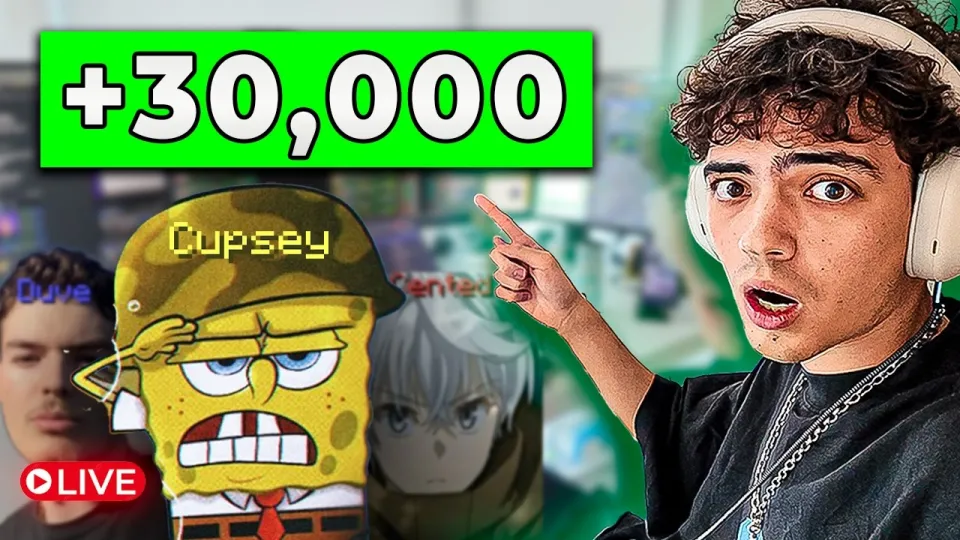
Video: I Traded With The World’s #1 Memecoin Trader
Need articles like this for your video? They help promote it on YouTube and Google — order them in the Telegram bot @sat_sit_bot. Articles with your video embedded are written and posted by the bot itself — on popular topical sites (no ads). Your first 50 articles are free.
· based on the channel Ethan Prosper
Key takeaways
- Meme coin trading on Solana runs through launchpads like pump.fun and terminals such as Padre, BullX and Axiom.
- In the Ethan Prosper video with Cupsey, single trades produced results in the range of +200 SOL and +80 SOL, plus a reported +$15K on one Grok-themed coin.
- The most profitable style shown is high-frequency trench trading with 10+ hour sessions — the hardest style in crypto.
- Copy-trading top wallets is not a shortcut: multi-wallet coordination and insider supply mean late buyers often become exit liquidity.
- Position sizing and a written exit plan matter more than picking the next 100x.
Meme coin trading is the practice of buying newly launched, community-driven tokens on chains such as Solana, usually within minutes of liquidity going live, and selling into the first wave of demand. It works only if you treat it as a high-risk speculative activity with strict position sizing, a pre-planned exit and an acceptance that most launches go to zero. You can start on a Solana trading terminal through this Padre registration link, the same tool used in the Ethan Prosper session with trader Cupsey.
The format of that video is instructive: two experienced traders sit on a livestream, fire off trades in a handful of fresh pairs, and close out with results measured in hundreds of SOL. What viewers do not see is the years of screen time, the failed launches, and the dozens of positions that went nowhere. This guide breaks down what actually drives results in meme coins, where beginners get hurt, and how to build a process that survives contact with the market.
What a meme coin actually is and where it trades
A meme coin is a token with no cash flow, no product and no claim on anything — its price is pure coordination around a narrative, a mascot or a joke. Dogecoin and Shiba Inu are the legacy examples; the current generation launches by the thousand on Solana launchpads, where anyone can create a token and seed a liquidity pool in a couple of clicks.
That structure has consequences worth spelling out:
- Supply is effectively unlimited. There is no scarcity gatekeeper. New pairs appear continuously, which means attention — not capital — is the scarce resource.
- Liquidity is thin and removable. Creators can pull the pool, and large holders can exit into a shallow book, moving price 40–80% in a single transaction.
- Speed is the edge. In the video, entries and exits happen in seconds. Terminals like Padre, BullX, Photon and Axiom exist because a standard DEX interface is too slow for this cadence.
- Narratives rotate fast. A coin themed around an AI bot, a mascot or a cultural meme can run for hours and be dead by the next session.
If you cannot articulate why a specific token has attention right now — a live stream, a trending account, a launchpad leaderboard — you are not trading a meme coin, you are donating to whoever is selling.
How the top traders in the video actually operate
The Ethan Prosper session with Cupsey is a useful window into professional meme coin trading because the trades are shown live rather than curated afterwards. Four things stand out.
Trade flow, not conviction. Positions are opened across several fresh launches in a single sitting — Lobo, Cheese Coin, an AI Cook token, a Grok-themed coin, a Magic Internet Money dev play, Mosaic AI. Nobody is holding for a thesis; each is a short-lived attempt to catch a demand spike.
Size scales with track record, not hope. Results reported in the session include roughly +200 SOL on the opening trades and about +80 SOL on the Mosaic AI position, plus a reported +$15K on the Grok coin. Those numbers come from accounts that can absorb a total loss on any single name. A wallet holding 1.3 SOL cannot copy that sizing.
Wallets are public. Both the host's and the guest's addresses are shared openly, which is how copy-trading culture grew around these traders. It also means their entries are visible to everyone watching, including bots.
The work is boring. The comment section of the video contains the most honest observation of all: these are speed traders running 10+ hour days in the trenches, and it is the most difficult style in the market. The entertainment is edited; the grind is not.
Why copy-trading a top wallet usually fails
Copy-trading a profitable meme coin wallet sounds like the obvious shortcut, and it is the single most reliable way beginners lose money. The mechanics are stacked against the follower.
- Latency. By the time a wallet's buy appears on a block explorer and your copy bot executes, the price has already repriced. You buy the top of the move the leader created.
- Multi-wallet coordination. Experienced traders split capital across many addresses. A visible buy may be one leg of a structure you cannot see, including supply held elsewhere.
- Exit asymmetry. The leader can sell into the demand their own visibility generates. Followers who entered later are the demand.
- Survivorship in the feed. You see the +200 SOL session. You do not see the losing sessions, which is exactly the bias that makes the strategy look easy.
A healthier use of public wallets is research, not mirroring: study which launchpads and pair ages a trader favours, how quickly they cut losers, and what position size they risk relative to their stack. Then apply those rules to your own trades at your own scale.
A practical checklist before you ape into a launch
Before any meme coin entry, run the same short checklist every time; the goal is to remove decisions made in the heat of a candle. None of these steps guarantee a winner, but each one removes a known failure mode.
- Verify the contract and the pool. Confirm the token address from a single trusted source and check that liquidity is locked or burned. A freshly created pool with unlocked liquidity is a rug waiting to happen.
- Check holder concentration. If the top ten wallets control a large share of supply, your exit is their exit. Look for distribution rather than a tight cluster of fresh wallets.
- Confirm the narrative is live. Is there an active catalyst — a stream, a trending post, a launchpad leaderboard position? Stale narratives bleed.
- Size so a zero is survivable. A common rule is risking no more than 1–2% of your trading stack per position. If a full loss would change your month, the position is too big.
- Write the exit before entry. Decide the target and the invalidation level in advance. Speed traders often take partials quickly and trail the rest; what matters is that the plan exists before the adrenaline does.
- Accept the fee drag. Solana fees are small, but priority fees and slippage on thin pairs add up across dozens of trades. High-frequency styles demand a real edge to overcome that drag.
The risks nobody puts in the thumbnail
Meme coin trading carries risks that ordinary crypto investing does not, and they compound. Rug pulls and liquidity removal are routine. Sniper bots buy the first block of nearly every launch, so retail entrants start behind. Insider clusters and coordinated wallets can manufacture the appearance of organic demand. And the psychological load is severe: a 10+ hour session of rapid decisions produces fatigue-driven errors that no strategy survives.
The video's own comment section reflects this tension. Some viewers call the results insane and inspirational; others point out bluntly that these are the traders who multi-wallet and take money from slower participants. Both reactions are correct. The numbers are real, and so is the cost of being on the other side of them.
There is also a structural point worth repeating: you do not have to trade this way to make money in crypto. Larger, more liquid coins, longer holding periods and slower strategies exist precisely because most people cannot sustain trench-level intensity. Being inspired by a session like this is fine; assuming it is the only path is not.
Useful links
- Padre trading terminal — registration via Ethan Prosper's link
- Ethan Prosper's official site and links
- Cupsey on X
- SOLMAFIA free Discord community
- Pastel paid Discord via referral
Bottom line
The Ethan Prosper video with Cupsey is a rare look at professional meme coin trading executed live, and its honest lesson is that the edge belongs to people who treat this as a full-time, high-frequency job with strict risk control. Results like +200 SOL and +80 SOL are real outcomes of that process, not a template you can copy from a wallet tracker. If you want to participate, start with a terminal through the Padre link, size every position so a zero costs you nothing important, and treat the majority of launches as noise. The channel «Ethan Prosper» deserves credit for showing the work rather than just the wins — use it as a study resource, not a signal service.
Questions & answers
How much capital do I need to start trading meme coins?
There is no fixed minimum, but the practical constraint is position sizing rather than account size. If you risk 1–2% per trade, a wallet of a few SOL is enough to learn the mechanics on a Solana terminal without catastrophic damage. Traders reporting hundreds of SOL in a session are working with stacks large enough to absorb total losses on individual positions, which is a completely different risk profile.
Is copy-trading a top meme coin wallet a good strategy?
Rarely, because by the time a public wallet's buy is visible the price has already moved, and experienced traders often split capital across multiple addresses you cannot see. The leader can also sell into the demand their own visibility creates, leaving followers as exit liquidity. Public wallets are more useful for studying entry timing, pair selection and how quickly a trader cuts losses.
What does 'faucet' or 'trench' mean in meme coin trading?
Trench trading refers to sitting on launchpads and terminals for long sessions, scanning new pairs and taking many small, fast positions — the style shown in the Ethan Prosper session with Cupsey. A faucet, in this context, usually refers to a source of free or cheap tokens, such as a testnet or promotional distribution, rather than a reliable profit source.
Do I have to trade new pairs to profit from meme coins?
No. High-frequency launch sniping is the hardest style in crypto and demands full-time attention, fast tooling and tolerance for constant losses. Slower approaches — trading more liquid meme coins with established communities, or simply holding larger-cap assets — exist precisely because most people cannot sustain trench-level intensity.
Source: I Traded With The World’s #1 Memecoin Trader · Markdown version